If You Have These Two Holes in Your Back, It Means You Don’t… (1000 Words, No Link)
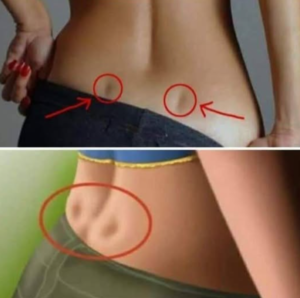
When people talk about the “two holes in your lower back,” they’re usually referring to Venus dimples—the pair of small indentations that sit just above the buttocks on either side of the spine. These dimples have become the subject of countless social-media posts, beauty claims, fitness myths, and even superstition. Some insist that they are signs of exceptional health. Others say they indicate elite athletic ability. And many viral posts imply that having them means you “don’t” have certain problems, such as excess fat, tight muscles, or poor circulation.
But the truth is far simpler—and far more interesting—than the rumors. These two small indentations are not a magical marker of anything; they are simply a part of human anatomy that shows more prominently on some bodies than others. Having them does not mean you automatically have a fast metabolism, superior genetics, or perfect health. Many people with excellent fitness and strong bodies do not have them, and many who do have them may not match any of the stereotypes attached to them.
What Are These “Holes,” Exactly?
The two dimples are formed by the way the skin attaches to the pelvic bones beneath it. Specifically, they sit where the skin is tethered to a naturally occurring point on the ilium, part of the pelvis. Because of this attachment, the skin dips slightly inward, creating the small hollows that people notice.
They’re often called “Venus dimples” in women and “Apollo dimples” in men, but these are just poetic names. They don’t indicate anything mythical or extraordinary. They’re simply a structural feature—like dimples in the cheeks or the shape of a person’s ears.
Why Some People Have Them and Others Don’t
The biggest factor determining whether you have visible back dimples is genetics. Some people inherit the anatomical shape and tissue distribution that make them stand out. Others do not—and that’s perfectly normal.
Several things can make them more or less visible:
-
Lower body fat levels may make them easier to see, but plenty of people with low body fat don’t have dimples at all.
-
Muscle tone, especially around the lower back and hips, can highlight the natural contours of the bones.
-
Pelvic bone structure varies widely from person to person. Some people have deeper natural indentations; some have none.
But none of these factors mean that having them—or not having them—defines your health, your fitness, or your attractiveness.
Common Myths About Back Dimples
A lot of viral posts claim that these dimples prove you “don’t” have certain issues. Let’s break down a few of the most common myths.
-
“If you have back dimples, it means you don’t have excess fat.”
This is false. People of many different body types can have visible back dimples, and others with very lean physiques may not. Dimples depend more on bone structure than on weight. -
“It means you don’t have poor circulation.”
There’s no scientific link between these dimples and blood flow. Healthy circulation depends on many factors, and having or not having dimples has nothing to do with it. -
“It means you don’t have weak abs or a weak core.”
Back dimples don’t reflect the strength of your core muscles. You can be extremely strong and still not have dimples, because strength and bone structure are unrelated. -
“It means you don’t have bad posture.”
Posture is influenced by habits, muscle balance, and spinal alignment—not dimples. Whether they show or not has nothing to do with how you stand.
These ideas spread because back dimples are sometimes associated with lean, athletic figures, but the dimples themselves are not the cause of those traits.
Why People Find Them Attractive
Many cultures view lower-back dimples as aesthetically appealing. This perception dates back centuries and has more to do with symmetry, proportion, and the subtle curves of the human body than anything biological. Because the dimples rest at the point where the back meets the hips, they accentuate the natural lines of the lower torso—something that people often consider attractive regardless of gender.
Beauty trends come and go, but features like these dimples tap into something more timeless: the natural shape of the human body.
Are They Rare?
Not particularly. Some estimates suggest that around 20–25% of people have noticeable ones, but this varies by population and body type. Many others have them faintly or only when they twist or bend a certain way.
They’re not a sign of superiority or rarity; they’re simply one variation of normal human anatomy.
Can You “Get” Them Through Exercise?
Although many fitness gurus claim you can train yourself to develop dimples, this is mostly misleading. Because the dimples are caused by the way the skin attaches to the bone, no amount of muscle training will create them if your natural anatomy doesn’t make them visible.
That said, building strong muscles in the lower back, core, and glutes can increase definition in that region. This can accentuate the dimples if you already have them, but it won’t create them from scratch.
What They Actually Mean About Your Body
Despite all the myths, back dimples don’t guarantee or rule out anything. They don’t mean you “don’t” have certain problems. They don’t mean you “do” have special traits. They are simply an inherited physical characteristic.
Here’s what they actually tell you:
-
Your pelvic bones are shaped in a way that allows the indentations to be visible.
-
Your skin attaches to the bone at those points in a slightly deeper way than average.
-
Your body has its own unique combination of fat distribution, muscle tone, and structural alignment.
And that’s it.
The Bottom Line
If you have these two holes in your back, it doesn’t mean anything mystical or medically significant. It doesn’t guarantee physical advantages or reveal hidden flaws. It doesn’t prove that you don’t struggle with weight, posture, circulation, or strength.
It simply means you are one of many people whose anatomy naturally forms small indentations in the lower back. They are normal. They are harmless. They are just another beautiful variation of the human body.
Some people have them, some do not—and both are completely natural.