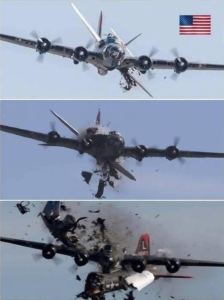
They arrived with folding chairs, sun hats, and the wide-eyed excitement that only an air show can inspire. Families pointed skyward. Veterans stood quietly, hands folded, already aware of what those aircraft meant. Children clutched popcorn and flags, waiting for the roar that shakes the chest and the heart all at once. No one there imagined that within minutes, celebration would turn to stunned silence, and memory would replace spectacle.
The Dallas air show was meant to honor history—the daring pilots of another era, the machines that once defended freedom, and the stories that refuse to fade. World War II–era warbirds carved slow, graceful arcs through the sky, their engines humming with nostalgia and reverence. Each pass was a reminder of sacrifice, of courage forged in a far more dangerous time. The crowd watched in awe, cameras raised, smiles wide.
Then, in a heartbeat, everything changed.
A maneuver began like countless others before it. Two aircraft, each iconic in its own right, moved through their planned paths. To the untrained eye, it looked flawless—precision, timing, trust. But the margin for error in the sky is unforgiving. A fraction of a second. A few feet of miscalculation. And suddenly, the unthinkable unfolded before thousands of witnesses.
The collision came without warning.
Metal met metal in a violent instant, and the sky itself seemed to shatter. One aircraft split apart, debris spiraling downward in horrifying silence before gravity reclaimed it. The other followed moments later, breaking the illusion that this was still a performance. Gasps turned into screams. Cheers vanished, replaced by disbelief so heavy it felt physical. People froze, unable to process what their eyes were telling them.
Six lives were lost in seconds.
These were not reckless thrill-seekers. They were experienced pilots, historians of the air, guardians of living machines that few can fly and even fewer truly understand. Each of them carried thousands of hours in the cockpit, years of training, and a deep respect for the risks they accepted. They flew not for fame, but for remembrance—for the men and women who once depended on similar aircraft in the darkest days of history.
As wreckage fell to the ground, a terrible stillness settled over the crowd. Parents covered children’s eyes too late. Some spectators dropped to their knees. Others stood motionless, hands over mouths, whispering the same stunned words: No… no… no. Sirens wailed in the distance, but everyone knew that help, however swift, would not change the outcome.
The show was over, but the trauma had only begun.
In the moments that followed, confusion and grief rippled outward. Phones trembled as people tried to call loved ones, to say, “I’m okay,” or simply to hear another human voice. Strangers embraced, bound together by shared shock. Veterans wiped away tears, recognizing a familiar pain—the sudden loss of comrades, even if they had never met them.
For the families of the pilots, time fractured entirely. A morning that began with routine preparations and quiet confidence ended with a knock no one ever wants to hear. Six heroes left for the sky and never returned. Their absence echoed far beyond the airfield, reaching homes, hangars, and tight-knit aviation communities across the country.
In the days after, investigators would examine flight paths, radio calls, angles, and altitude. Questions would be asked, answers carefully measured. But no technical explanation could ease the weight carried by those who watched it happen, nor by those who lost someone they loved. Understanding how does little to soften the reality of who was lost.
What remains most powerful is not the moment of impact, but what came before it.
These pilots dedicated their lives to keeping history alive. They believed that the sound of a radial engine overhead could teach lessons books alone never could. They trusted one another completely, knowing that every formation flight depends on discipline, precision, and mutual respect. They accepted risk so future generations could look up and feel inspired rather than afraid.
That day, the sky took them—but it did not erase them.
Memorials formed almost immediately. Flowers, handwritten notes, and miniature flags appeared at fences and hangars. Online, stories poured in from people who had met the pilots, flown with them, or simply watched them perform years earlier. The same words appeared again and again: professional, passionate, generous, fearless.
The crowd that came to be entertained left carrying something far heavier—a reminder of how quickly joy can turn to sorrow, and how thin the line is between honor and tragedy. Many would later say the image never left them: a clear blue sky, suddenly broken, and the sound that followed, echoing in their minds long after the engines fell silent.
Yet even in horror, there was reverence.
As the sun set that evening, flags across the nation were lowered. Six empty cockpits stood as quiet symbols of sacrifice—not in war this time, but in remembrance. Their final flight became part of the very history they worked so hard to preserve.
They came to watch a show.
They left having witnessed the unthinkable.
And though six heroes were gone in an instant, their legacy endures—etched into the sky, carried in memory, and honored every time someone looks up, hears an engine roar, and remembers why courage still matters.