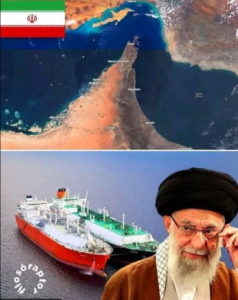
🚨 BREAKING: Iranian Parliament Approves Closure of the Strait of Hormuz — What It Means and Why It Matters (Comprehensive Analysis)
June 22–25, 2025 — Tehran, IRAN (Reuters and Press TV)
Iran’s parliament — the Majlis — has approved a resolution authorizing the closure of the Strait of Hormuz, a strategically vital waterway through which a substantial portion of the world’s oil and gas supply transits. State-controlled media outlets in Tehran reported that lawmakers voted overwhelmingly in favor of empowering the government to shut the passage if deemed necessary, amid escalating regional tensions following U.S. military action against Iranian nuclear installations.
However, while this parliamentary vote marks a significant political gesture, it does not immediately result in closure. Under Iran’s constitutional structure, the final authority to carry out such a decision rests not with the Majlis but with the country’s Supreme National Security Council (SNSC) — the highest state security body — and ultimately with Supreme Leader Ayatollah Ali Khamenei.
📍 Why the Strait of Hormuz Is So Crucial
The Strait of Hormuz is one of the world’s most critical maritime chokepoints:
-
It connects the Persian Gulf with the Gulf of Oman and the Arabian Sea, serving as the primary sea route for oil exports from major producers such as Saudi Arabia, Iraq, Kuwait, the UAE, and Iran itself.
-
Roughly 20 % of the world’s crude oil and liquefied natural gas (LNG) passes through this narrow waterway daily.
The strait is only about 24–33 km (15–20 miles) wide at its narrowest point, with shipping lanes restricted to just a few kilometers in each direction. This narrow geography makes it both strategically indispensable and vulnerable — a fact that has shaped Middle Eastern geopolitics for decades.
🧠 Political Context: Why Now?
The parliamentary move comes against the backdrop of a renewed and intense confrontation in the Middle East:
1. U.S. Strikes on Iranian Nuclear Sites
Just before the vote, the United States launched a series of coordinated airstrikes targeting Iranian nuclear facilities — including at Natanz, Fordow, and other sites — which Tehran characterized as blatant acts of aggression. Iranian officials framed the parliamentary decision as part of electoral and sovereign defensive options, citing the strikes as justification for pushing back against Western intervention.
2. Parliament’s Hardline Turn
Iran’s legislature has become increasingly dominated by hardline conservatives in recent years. These factions have steadily tightened Iran’s stance toward the West, especially on security and nuclear issues, and have pushed for escalatory positions in response to perceived threats. Approving the Hormuz closure resolution fits within that broader trend.
3. Internal Pressures and Regional Dynamics
Beyond external military tensions, Iran’s domestic politics also influence such decisions. Economic hardship, sanctions, and political power struggles have raised the stakes for lawmakers eager to signal strength and unity. While this vote is symbolic in many respects, it reflects pressure from conservative constituencies who frame resistance to foreign influence as a core priority.
⚖️ What Parliament Actually Did — Symbolism vs. Implementation
It is crucial to distinguish between these two:
✔️ What Parliament Approved
The Majlis voted in favor of a motion that authorizes the closure of the Strait of Hormuz under certain circumstances — mainly in retaliation for foreign military action or perceived aggression. This reflects broad political support among lawmakers for considering such a drastic move.
✖️ What Has Not Yet Happened
-
The strait has not been officially closed.
-
No legal or operational steps to physically prevent commercial shipping are in place.
-
A motion in parliament does not have the legal authority to mandate the closure — only to express the legislature’s intent.
-
The SNSC must evaluate, authorize, and order any actual implementation — and that body’s deliberations and conclusion have not been publicly announced.
In previous statements, lawmakers like Esmail Kosari — a senior member of the parliament’s National Security Commission — have reiterated that while closure is on the agenda, no final decision has been made and is still under review by security authorities.
🌍 Global Implications of a Potential Closure
Should the SNSC decide to go forward and Iran attempt to block or make transit through the strait unsafe, the consequences would be severe and wide-ranging:
1. Energy Markets and Prices
-
The global oil market would likely react immediately with price spikes due to concerns about disrupted supply.
-
Brent crude and other benchmarks could surge sharply, with ripple effects for gasoline and fuel prices worldwide.
-
Countries heavily dependent on Gulf energy exports (e.g., China, India, South Korea, Japan, and European states) would face potential supply disruptions and elevated import costs.
2. Shipping and Commerce
-
Alternative routes (around Africa’s Cape of Good Hope, via pipelines, or through the Suez Canal) are significantly more time-consuming and costly — adding days and tens of thousands of dollars to shipping costs.
-
Interruptions would affect not just oil but also trade in LNG, metals, and other commodities reliant on maritime transit.
3. Geopolitical Fallout and Conflict Risk
-
A real closure would escalate tensions sharply between Iran and the United States, Israel, and Gulf Arab states — potentially triggering military responses or broader conflict.
-
Regional security frameworks could fracture further, drawing in NATO partners and other global powers.
4. Iran’s Own Economy
-
Ironically, closing the strait would also hurt Iran’s own economy, which depends heavily on oil exports routed through the same waterway.
-
Even if Iran uses asymmetric means to block foreign shipping, its own trade and revenues would also be at risk. Analysts thus view the threat as a powerful bargaining tool rather than a guaranteed policy execution.
✍️ Expert Assessments and Global Reactions
-
Market analysts warn that even the possibility of closure can trigger volatility in energy markets.
-
U.S. and allied governments have publicly stated they are monitoring the situation and committed to ensuring freedom of navigation.
-
Countries reliant on Gulf oil have urged restraint and diplomatic resolution to avoid destabilizing world markets.
Despite the dramatic headlines, many analysts believe a full closure is unlikely due to the severe economic and strategic costs to Iran, as well as the considerable military and diplomatic risks. Still, the parliamentary vote serves as a stark warning of escalating tensions and Tehran’s willingness to use every lever available — including one of the world’s most sensitive strategic chokepoints — to counter external pressure.
🧭 What Happens Next?
-
SNSC Deliberation: Iran’s Supreme National Security Council will assess whether to take the parliamentary motion forward.
-
Supreme Leader Decision: Ayatollah Khamenei, as Iran’s ultimate authority, will likely have decisive influence over any final decision.
-
International Diplomatic Efforts: External powers — including China, Russia, the EU, and the U.S. — could intensify diplomatic engagement to prevent escalation.
-
Market Monitoring: Global energy markets will remain highly sensitive to any new developments.
In summary, Iran’s parliament has endorsed the possibility of closing the Strait of Hormuz, reflecting deep domestic and regional tensions after recent U.S. military actions. But the vote is symbolic unless Iran’s top security council and supreme leadership choose to enforce it — a decision with profound economic and political consequences for Iran and the world.