📌 Overview: What’s Happening Now
In late January 2026, the United States has sharply increased its military presence and operations in the Middle East, particularly around Iran, while continuing ongoing counter-terror missions in Syria and responses to regional militia threats. The tensions have triggered international concern about the risk of broader conflict or full-blown war.
Key elements include:
1. Major U.S. force deployment near Iran
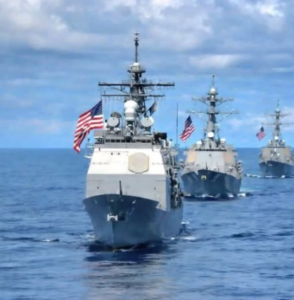
President Trump announced a “massive armada” of U.S. naval forces, led by the aircraft carrier USS Abraham Lincoln, is headed to the Middle East. The administration frames this as pressure on Iran to return to nuclear negotiations and to deter Tehran’s nuclear ambitions. Iranian leadership, however, has rejected these ultimatums and vowed to defend against any attack.
2. Expanded Military Posture and Readiness Drills
U.S. Central Command has launched large military readiness exercises in the region — involving rapid deployment drills and allied coordination — which many analysts see as preparation for possible combat operations as tensions rise with Tehran.
3. Heightened Threats from Iranian-Backed Militias
Militias backed by Iran in countries like Iraq and Yemen have issued warnings and escalated attacks, particularly against maritime targets, as U.S. forces arrive. This dynamic increases the risk that smaller conflicts could widen.
4. Continuation of Other Military Actions
Separately from Iran tensions, the U.S. continues active military strikes against ISIS targets in Syria and has conducted strikes on suspected drug-trafficking vessels and militias in maritime regions like the Caribbean and Pacific.
🧨 What’s Driving the Escalation?
🔹 Nuclear and Security Focus on Iran
The core flashpoint is Iran’s nuclear program and regional influence. The Trump administration has demanded Iran return to negotiations that would ban nuclear weapons and constrain ballistic missile development. Officials have warned that time is running out and that force is a possible tool to enforce demands. Tehran has countered that “menaces” from the U.S. make diplomacy untenable and has promised strong defense.
Underlying this is the fear — shared by many U.S. allies — that an unchecked Iranian nuclear capability could destabilize the Middle East further, emboldening proxies and upsetting the regional balance.
🔹 Militia and Proxy Threats
Iran-aligned groups in Yemen and Iraq have ramped up threats against U.S. forces and shipping routes, particularly in response to American military posturing and the deadly crackdown on internal Iranian protests. Some groups have signaled that any strike on Iran could trigger expansive conflicts.
These dynamics — where actions by one side ripple into threats by proxies — are classic precursors to broader war escalation.
⚔️ What U.S. Military Actions Are Underway?
🇮🇷 1. Middle East Build-Up and Potential Strikes
The arrival of the USS Abraham Lincoln and associated destroyers, fighters, and defense systems is the most visible sign of escalation. While the stated mission is deterrence, the scale and posture have drawn comparisons to pre-war deployments.
Officials say that the fleet gives the U.S. capacity to strike Iranian missile installations, leadership targets, and potentially fuel export infrastructure if ordered. Analysts caution, however, that deeper military success against Iran is uncertain, given the country’s large territory, air defense, and proxy networks.
🇸🇾 2. Ongoing Operations Against ISIS
The U.S. has continued operations against Islamic State (ISIS) and affiliated extremist groups in Syria. Major retaliatory airstrikes were launched after ISIS fighters killed U.S. personnel in late 2025. These operations — labelled Operation Hawkeye Strike — have targeted ISIS infrastructure and command centers to prevent future attacks on U.S. troops.
These missions are part of the broader war on terror and are distinct from the Iranian confrontation, but they illustrate the U.S. military’s multi-theater engagement.
🌍 3. Maritime and Anti-Trafficking Strikes
The U.S. military has also conducted strikes against suspected drug-trafficking vessels and operations at sea. One such strike killed individuals aboard an alleged smuggling boat in the Pacific, and ongoing coastal interdictions continue in Caribbean regions. These efforts are justified by U.S. officials as part of a campaign against organized crime, though critics argue they risk international tension.
🧠 International and Legal Reactions
🛑 Global Concern and Condemnation
Many countries and international bodies warn that U.S. military escalation could violate international law and risk a much wider conflict. Allies in the European Union, as well as Russia and China, have criticized expansive U.S. strikes and the aggressive posture.
Regional states such as Saudi Arabia, Egypt, and the United Arab Emirates have urged restraint, fearing that conflict with Iran could spill over into wider Middle Eastern warfare.
🏛️ U.S. Domestic Debate
Within the United States, lawmakers from both parties have expressed concern about military escalation without clear Congressional authorization. The U.S. Constitution assigns the declaration of war to Congress, and critics argue that the executive branch’s actions may exceed that authority.
Some U.S. officials have framed certain actions — like the Venezuela operation earlier in January — as limited law enforcement or tactical operations, not wars, but the legal basis is under debate.
🧭 What Happens Next?
🔹 1. Diplomatic Channels
Diplomacy remains technically open, but Tehran says it will not re-engage if threatened. Western allies push for talks, while U.S. leaders maintain pressure.
🔹 2. Risk of Miscalculation
With forces in close proximity to Iranian defenses and proxy militias, a misinterpreted action (e.g., a stray missile or mistaken engagement) could rapidly spiral into full combat.
🔹 3. Global Economic Impact
Conflict around the Strait of Hormuz — a strategic oil chokepoint — could sharply disrupt energy markets with worldwide economic ripple effects.
📍 Bottom Line
-
No official ‘war declaration’ exists yet, but U.S. military actions — especially near Iran — are the closest the country has been to open conflict with a major rival in decades.
-
Naval deployments, readiness drills, and strategic messaging are intensifying risk.
-
Other theaters (ISIS in Syria, maritime drug interdictions) continue actively.
-
International actors are urging de-escalation but are also preparing for possible fallout.
This remains a rapidly evolving situation. If you want updates with timestamps and a running timeline of events as they unfold, I can provide them. Would you like a timeline summary of the last 30 days of related developments?