Video Shows ICE Agents Pulling Disabled Woman from Car in Minneapolis
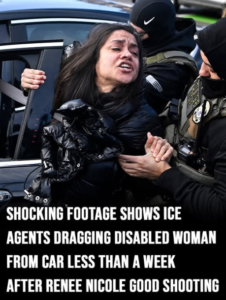
A tense confrontation between federal immigration agents and a woman in Minneapolis has drawn widespread public attention after video footage emerged showing ICE agents forcibly removing a disabled woman from her car. The incident took place on Tuesday, January 13, 2026, amid heightened tensions in the city following previous clashes between local communities and federal law enforcement.
The Scene Caught on Video
In footage shared widely on social platforms and reported by multiple outlets, several masked agents from U.S. Immigration and Customs Enforcement (ICE) are seen approaching a stopped vehicle in a South Minneapolis neighborhood. The woman is inside the car with the engine running when the interaction begins. Agents are heard and seen telling her to move her vehicle, though the chaotic environment — with protesters and law enforcement voices overlapping — makes communications difficult to parse.
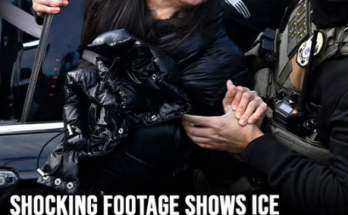
At one point, multiple agents break the passenger-side window of the car with force. As the woman remains inside, officers reach in, grab her arms, and pull her onto the pavement. In the footage, she repeatedly tells them she is disabled and was trying to go to a doctor’s appointment, stating clearly, “I’m disabled, I’m trying to go to the doctor up there, that’s why I couldn’t move. I am an autistic disabled person.”
Protesters and bystanders can be heard shouting at the agents, with some yelling phrases like “Where is your humanity?” and “All you do is hurt.” Amid the confrontation, law enforcement also deployed tear gas, flash-bang grenades, and pepper balls to disperse crowds nearby.
Identification and Background of the Woman
Subsequent reporting identified the woman as Aliya Rahman, a 42- or 43-year-old Minneapolis resident, software engineer, and activist involved in racial justice and LGBTQ+ advocacy. Rahman has worked in technology and community organizing, including promoting police reform and supporting policies around body-worn cameras.
While initially called “unidentified” in immediate news reports, later accounts noted her professional background serves both in tech and social justice spaces, and that she engaged with local advocacy work before the incident. Her public profile and involvement drew particular attention because she is a U.S. citizen who repeatedly told agents she needed to get to a doctor’s appointment, not to flee or evade law enforcement.
What Led Up to the Encounter
The encounter did not occur in isolation. It happened days after another Minneapolis incident in which a separate ICE encounter turned deadly, when 37-year-old Renee Nicole Good was shot and killed by an ICE agent during an immigration enforcement operation. That shooting sparked protests and growing criticism of federal tactics in Minnesota.
As protests continued, federal agents remained active in parts of Minneapolis, carrying out enforcement actions while facing a hostile and highly emotional public response. According to official statements, ICE agents were in the area to execute an arrest warrant for a man suspected of illegal entry into the U.S., and the woman’s vehicle was near or partially blocking their movements when the confrontation began. It remains unclear from available video whether her stopping was intentional or part of her attempt to navigate the crowded streets amid protests.
The Arrest and Aftermath
After she was pulled from the car, agents handcuffed Rahman and took her into custody. Some reports note that she was later released, although details about any charges connected to the incident have not been fully confirmed in public sources.
The Department of Homeland Security (DHS), which oversees ICE, acknowledged that agents were conducting enforcement operations in the area and said its officers are authorized to act if their work is impeded by crowds or vehicles. ICE officials publicly warned that they would arrest people who “interfere with or impede” their operations.
Community Response and Outrage
The broadcast and circulation of the video immediately sparked outrage among local residents, activists, and civil rights advocates. Many saw the removal of a disabled woman — one who clearly declared her condition and her destination — as excessive and lacking necessary de-escalation or special accommodation. Critics questioned why agents did not take the woman’s disability into account before resorting to force.
Protesters at the scene and commentators online also connected this incident to the broader context of federal involvement in Minneapolis following the earlier fatal shooting. Many expressed that rather than calming tensions, the aggressive tactics continued to inflame emotions and erode trust between communities and law enforcement.
Disability Rights and Law Enforcement Practices
Legal and disability rights advocates have highlighted that law enforcement training on interacting with people who disclose disabilities is crucial — especially when individuals say they require accommodations or have conditions that affect their ability to respond quickly to commands. The footage showing the woman telling ICE agents she is autistic and disabled underscores this concern, prompting questions about whether proper protocol was followed.
Across the U.S., there have been repeated calls for clearer law enforcement guidelines on how to handle interactions with people who identify as disabled or neurodivergent, particularly in high-stress situations involving protests or crowd control.
Federal Enforcement and Local Tensions
Minneapolis has become one of the most visible fronts in the nation for contentious immigration enforcement. After the fatal shooting of Renee Good, local leaders — including the Mayor and State Governor — have criticized the federal approach and called for more transparency and restraint. At the same time, federal authorities maintain they are lawfully executing orders and maintaining public safety amid what they describe as obstruction by protesters and agitators.
The deployment of masked agents, chemical irritants, and other tactics has drawn comparisons from community members and civil liberties groups to militarized policing, raising questions about how enforcement operations should be conducted in residential areas.
Why the Incident Matters
This incident — and the video capturing it — illustrates several critical issues at play in today’s U.S. justice and public safety landscape:
-
How federal law enforcement interacts with civilians during operations.
-
Whether disability disclosures are adequately accounted for by agents.
-
How local protests and federal enforcement intersect in public spaces.
-
The broader debate over immigration policy and law enforcement oversight.
The sight of a visibly distressed woman being restrained and dragged from her vehicle — particularly after declaring her disability and medical need — has struck many as emblematic of deeper tensions between law enforcement and community expectations of humane treatment.
Looking Forward
As more details emerge, including any official investigations or legal responses, the Minneapolis incident will likely continue to be referenced in national discussions about federal policing, immigrant enforcement operations, disability rights, and civil liberties. The footage has already had a significant impact on public discourse, prompting lawmakers, advocates, and everyday citizens to ask tough questions about policy, training, and accountability when law enforcement engages with vulnerable individuals.